
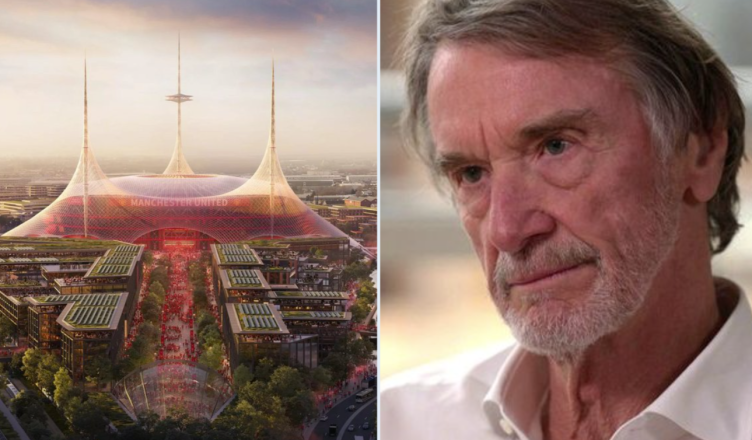
Sir Jim Ratcliffe and Manchester United’s plans for a new 100,000-seater stadium to replace Old Trafford have caused quite the conversation amongst Premier League clubs since being announced on Tuesday morning.
But what could it possibly mean for Newcastle United, who are of course themselves looking towards the future in terms of stadium plans.
Has the announcement by the Red Devils given the Magpies any ideas on what to do (and more importantly, what NOT to do) should they move away from St James’ Park in the next few season? It also raises the question just how are they getting away with it.
One PSR rule for them?
Like seemingly every debate in the Premier League nowadays, it ultimately circles back to PSR rules and regulations.
Speaking on The Overlap, Ratcliffe had hinted that Manchester United were on the verge of bankruptcy. “Manchester United has lost money for the last seven years” with £330m lost in the last four years alone.
And it’s understood that with government funding, not only will the new plans heavily reduce costs of a £2bn project, but accelerate construction and allow Manchester United to put themselves in a better position that very few (if any) other clubs in the Premier League would be afforded.
Football finance expert Kieran Maguire spoke on the matter: “The good news for Manchester United is that the club is in a position to borrow substantial sums, despite existing levels of debt.”
“The increase in commercial income is due to the club having a bigger multi-function stadium, used for a myriad football and non-football events such as NFL, music concerts and boxing.”
If Newcastle and the rest of the Premier League’s most financially hamstrung clubs were to look for an excuse to exercise a bit more financial power in defiance of PSR, then this could be a shining example to point to and say ‘we’re just trying to compete’.
However, the fact Man Utd can be bailed out like this after £330m losses adds to the feeling that it’s one rule for the ‘big six’ and another for the rest, with this coming after years of Chelsea’s free-spending with no sanctions and Man City still without punishment after 115 charges.
So #MUFC have £700m worth of debt, but are getting a new, government funded stadium. Once the stadium is built and they start getting 100k attendances every week, that will all go into the club, boosting their finances and their PSR compliance. Seems fair. https://t.co/mZv8PP4Zy2
— Rob M (@Im_RobM) March 11, 2025
Locality is priority
Despite the mixed responses to the proposed plans from Manchester United fans, one seemingly-universal opinion is that the stadium remaining in the Trafford area of Greater Manchester is a good thing.
And although the PIF and club hierarchy never truly looked like moving too far away from Newcastle City Centre, the positive response that Manchester United have received should be an increasingly obvious sign that staying local is the best possible situation.
Though swathes of the fan base would prefer to stay at St James Park for as long as possible, the rumours that a new stadium would be a mere stone’s throw away on Leazes Park is absolutely the right call, and an open goal for the ownership.
Multi-purpose is a must
The ‘new’ Old Trafford, previously heralded as a potential ‘Wembley of the North’, is slated to become the biggest ground in the UK upon completion.
Boasting a 100,000 strong capacity, it’s understood that the venue could potentially host more gigs and special events like the Tottenham Hotspur Stadium, which has become a go-to ground for the NFL in recent years.
Aside from Sam Fender shows and the occasional rugby fixture, St James’ Park’s usage outside of hosting Newcastle games is virtually non-existent: the club must follow suit like the rest of the ‘Big Six’ and even the likes of Aston Villa and ensure any new development plans allow for a multi-purpose venue to be available.
This would not only massively help the club in terms of PSR headroom, but also potentially help boost tourism and substantially aid the local economy outside of the regular season.





Apparently the new ground is “in line” with the governments plans for the region, because they expect it will create around £7.5bn per year for the region. Newcastle Uniteds ground is not gifted with government help, they did assist with the Newcastle United foundation, to a degree. It does mean that Manchester will not have to put such a hold on their transfer plans while the stadium is being built because it’s not coming out of their budget. This is commonly called two-tier assistance, or “to hell with PSR we’ve got government help around it” or “let’s stop Newcastle United from spending”.
Flyingmag(Quote)
Man U is not about football. The Glaziers & Jim Boy are there for THE MONEY!
Government funding is a hoot! Can we have some too Mister? NOt A Bl**dy Chance!
William Cowx(Quote)
PSR doesn’t really matter when building a new ground as the rules put it “Building a stadium to increase seats is not PSR restricted” our owners can afford it theirs can’t.
The real debate is government funding, it’s sickening that a club in so much debt can be bailed out by tax payers money.
It is also quite fitting that the mock up stadium pictures look like a circus tent what with the bunch of clowns that run that club.
Absolutely glorious(Quote)
FFS the gov money is the transport infrastructure not the stadium.
I don’t like it either as I want the money in the NE not the faux-norf but if you’re gonna whine get yer story straight
GR(Quote)
As I understand it they are not getting “a new, government funded stadium”
The regeneration of the area is funded by the government but any costs related to the new stadium will be paid by the club. I would however be interested to see how a club with so much debt has avoided being clobbered by PSR rules.
mactoon(Quote)