Some football managers prefer working with small squads. Mid-2000s Jose Mourinho frequently espoused the advantages of working with a smaller core group of players, while Nuno Espirito Santo has brought recent success to less prestigious clubs using a similar squad building philosophy.
As recently as May this year, Pep Guardiola was threatening to quit unless Manchester City trimmed their squad, arguing that academy players could be utilised in the event of an injury crisis (admittedly an easier argument to make if the club’s academy is one of the best in the world). Guardiola said in 2023 that recruitment should focus on versatility and pointed out that for players to be effective they have to be starting games regularly.
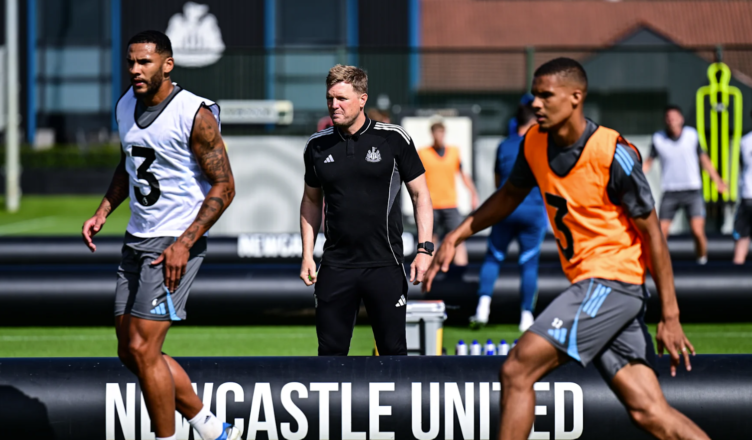
In one sense, having a squad with less options makes a manager’s job easier. Team selection wasn’t an area Eddie Howe had to worry about during much of 2023/24 because the squad was so decimated by injury that the team picked itself. For the entirety of Howe’s almost four-year tenure as Newcastle manager, there has been a chasm in quality between his first-choice players and the backups. This has caused issues in performance levels when his best players have been unavailable but has also contributed to Howe’s ability to create a tight-knit culture, without many egos to appease.
For each of Howe’s seasons in charge from 2021/22 through to 2024/25 it would be a straightforward task to reel off Newcastle strongest team selection and tactical system, but things are changing.
With the challenges of two years ago still fresh, Newcastle have tried to ensure that they have a squad fit for fighting on four fronts this season. Although a couple of the new recruits have already been hit by untimely injuries, Howe now has viable options across the pitch, which give his team selections and tactical set up an extra layer of interest, intrigue and scrutiny.
So far from six games this season Newcastle have started matches with two different formations (4-3-3 and 5-3-2) and have only kept the same starting XI once (Aston Villa and Liverpool). Interestingly, the team that started the Villa and Liverpool games also started against Barcelona, which would suggest that that group of players have Howe’s trust as a unit at this very early stage of the season at least.
While the 5-3-2 at Leeds felt overly cautious and defensive against a promoted team, the same set up at bogey team Bournemouth resulted in an excellent defensive performance and a valuable point on the road. Bournemouth was the scene of one of the infamous dispiriting defeats in 2023 in the midst of that injury crisis, so it felt significant that Newcastle backed up a tough Champions League game with a relatively good performance against one of the league’s form teams on the south coast this time around.
Even more notable about the game at Bournemouth is that Howe made seven changes from the Barcelona starting team, with only Dan Burn, Tino Livramento and Sandro Tonali of the outfield players retaining their place. Bruno failed to start a Premier League game for the first time in two years, which demonstrates the historic reliance on him. While concerns remain about Newcastle attacking fluency, it is encouraging that some fringe players stepped in and performed well in a difficult game. This bodes well for the season ahead which will stretch the squad to the limits.
It is perhaps no coincidence that Newcastle’s defence has been so strong given the options available to Howe at the back. Lewis Hall and Malick Thiaw both made their first starts against Bournemouth, while Sven Botman looks more like his old self again. Utilising three central defenders may make sense given the current squad makeup and player availability, but if this is to be a regular occurrence Howe must find a way of ensuring the attack does not suffer too much. This is the sort of dilemma that he will wrestle with as the season progresses, and which may ease when the likes of Jacob Ramsey and Yoanne Wissa return, and when Newcastle’s attacking players start to gel.
It can be confronting and uncomfortable to look at a team sheet and see the best players on the bench, but that’s the way it has to be this season if Newcastle want to compete on all fronts while avoiding too many injuries. Just because Bruno and Joelinton were on the bench on Sunday it didn’t mean they had been ‘dropped’. This is squad management and is part and parcel of football at the top level.
Eddie Howe has performed miracles with Newcastle, and it would be wrong to suggest that he hasn’t had to balance his squad and pick up results – the Carabao Cup semi-final against Arsenal last season stands out as two games Howe rotated and got the team selection and tactics spot on. But 2023/24 was a struggle at times, and some lessons about managing a squad in Europe will have been learned by Howe and his team.
Now that Howe has a much-needed larger squad to work with, if he can rotate and adjust successfully on a consistent basis this season it will elevate him a level further towards the elite bracket that he has the potential to achieve.
With increased options comes pitfalls. Can Howe coach ‘backup’ players to step in when needed and perform at the level required without that fluency that comes with regular starts? Can he train a squad of 25 players to play in multiple formations and systems to a Champions League level? Will he select the right team and system for the right games? Can he keep everyone in the squad happy with less playing time, and by the end of the season will he crystalise a view about the ideal size for a squad competing on four fronts?
The answers to these questions will go a long way to determining the success or otherwise of the 2025/26 season.
HWTL!